
(UPRT) Upset Prevention and Recovery Training
Develop critical competencies to prevent and recover from aeroplane upsets with our EASA compliant course.
Overview of the UPRT
UPRT stands for aeroplane upset prevention and recovery training and constitutes a combination of theoretical knowledge and flying training with the aim of providing the flight crew with the required competencies to both prevent and recover from situations in which an aeroplane unintentionally exceeds the parameters for line operation or training (aeroplane upsets).
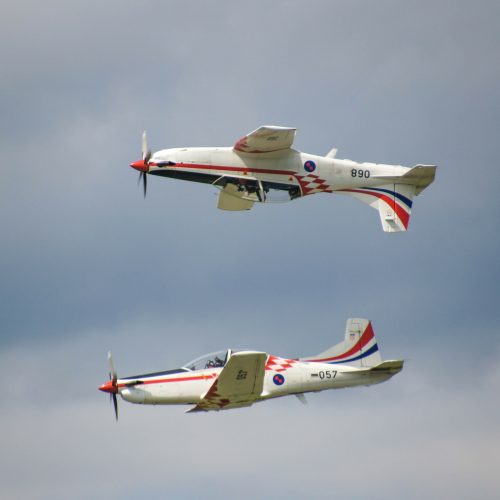
Aim of the Course
Upset Prevention Recovery Training (UPRT) is to increase the knowledge and skills in upset prevention and especially upset recovery. The final objective is to build resilience to psychological and physiological stress via a simulator.
A course completion certificate will be issued at the end of the course.

An Advanced UPRT
Advanced UPRT includes at least 5 hours of theoretical instruction as well as at least 3 hours of dual flight instruction in an aeroplane.
Class- or type-related UPRT during class or type rating training will address the specificities of the relevant class or type of aeroplane.
Prerequisites (Requirements)
- Be at least 17 years of age
- Be able to read, speak, write, and understand the English language
- Medical Certificate Class II
- Pass each subject (theoretical) examination with at least 80%
Course Curriculum
The curriculum is designed to meet strict safety and competency standards.
- UPRT Philosophy
- Criticality of academic/practical knowledge (AoA)
- Understanding Flight Upsets
- Avoiding Flight Upsets (Causes, Awareness, TEM)
- Recognising Flight Upsets (Situational Awareness)
- Recovery Strategies
- Counter-intuitive recovery actions
- Managing Startle and Fear
- Simplifying Flight Upset Recovery
- Developing resilience (UH Coping Funnel)
- Steep and Maximum Rate Turns
- Slow Flight at Vs1g: Level turns; turning and climbing/descending
- Stalling: Clean, power On and Off; Accelerated; Go arounds
- Upset Recovery:
- Nose High / Wings level and banked
- Nose Low / Wings level and banked
- High Bank angle / Overbank
- From maneuver and Ballistic (vertical)
- Trim runaways
- Spin: Incipient; Spiral Dive
- Wake Turbulence Recoveries
- Human Factors: Situational Awareness; Startle & Stress; TEM; CRM
Why pilots follow our UPRT course
- Increase your airmanship to unexpected events
- Escalate your capability to manage startle reflex
- Have a deeper understanding of aerodynamics
- Be more confident